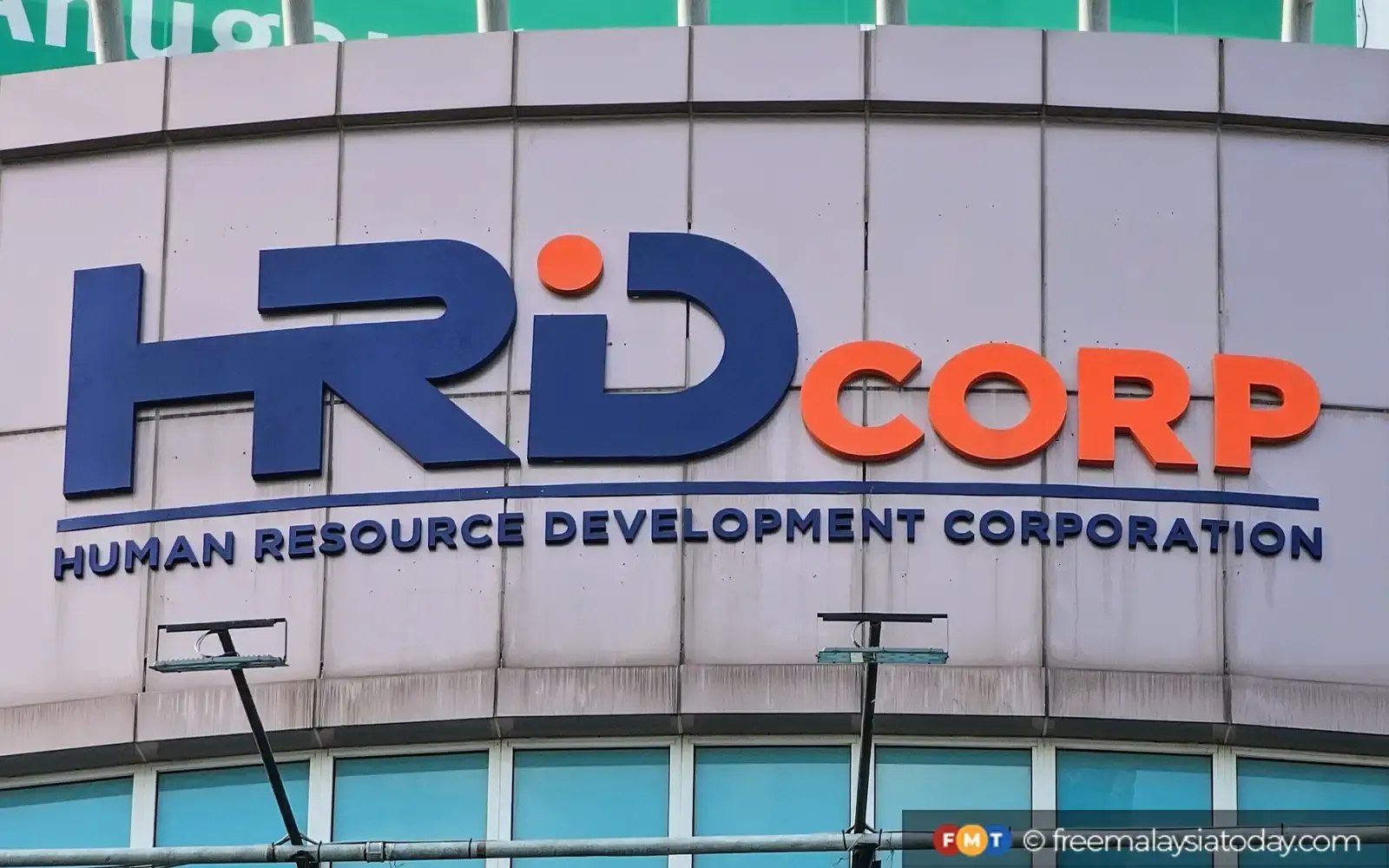
Most HR teams plan their training budget around one question: is this course claimable? Today, the answer for most general courses is simply yes, up to one fee cap. HRDC/HRDF’s new draft scheme reform changes that. Under the draft, how much of a course your levy covers depends on what kind of course it is, whether it is tied to a specific job role, and, for certification courses, whether the employee passes.
The short answer for employers: HRDF claimable training is not going away, but generic courses would get noticeably less funding, certification fees would only be claimable on a pass, and in-house groups would need at least five participants. The proposals are still a draft for consultation and may change before HRDC/HRDF issues a final circular. They are still worth planning around now, because 2027 training calendars are being set this quarter.
Why “is it claimable?” is no longer enough
Under today’s Allowable Cost Matrix, a general course is capped at RM10,500 per day per group for in-house training and RM1,750 per participant per day for a public class, whether the topic is time management or warehouse safety. That single cap made planning simple. Many training calendars filled up with broad courses such as communication or leadership basics because they were easy to justify and fully funded.
The draft replaces that single cap with tiers. A course that is easy to claim today may cover only part of its fee under the new structure, and a plan built on yes-or-no claimability could leave the employer with top-ups it did not budget for.
Check which tier each planned course would fall into
The draft sorts most employee training into four groups:
- Tier 1, certification and competency-based training: funded as charged, with assessment by an independent third-party body.
- Tier 2a, focus-area and proprietary programmes: funded as charged. Focus areas cover national priorities and emerging technologies. Proprietary programmes are branded methodologies, and the provider must show ownership or authorised delivery rights.
- Tier 2a, job-based technical training: RM10,500 in-house and RM1,750 public, the same as today’s general cap.
- Tier 2b, job-based non-technical training: RM7,350 in-house and RM1,200 public, about 30% below today.
- Tier 3, generic courses: RM5,250 in-house and RM800 public, about half of today’s cap.
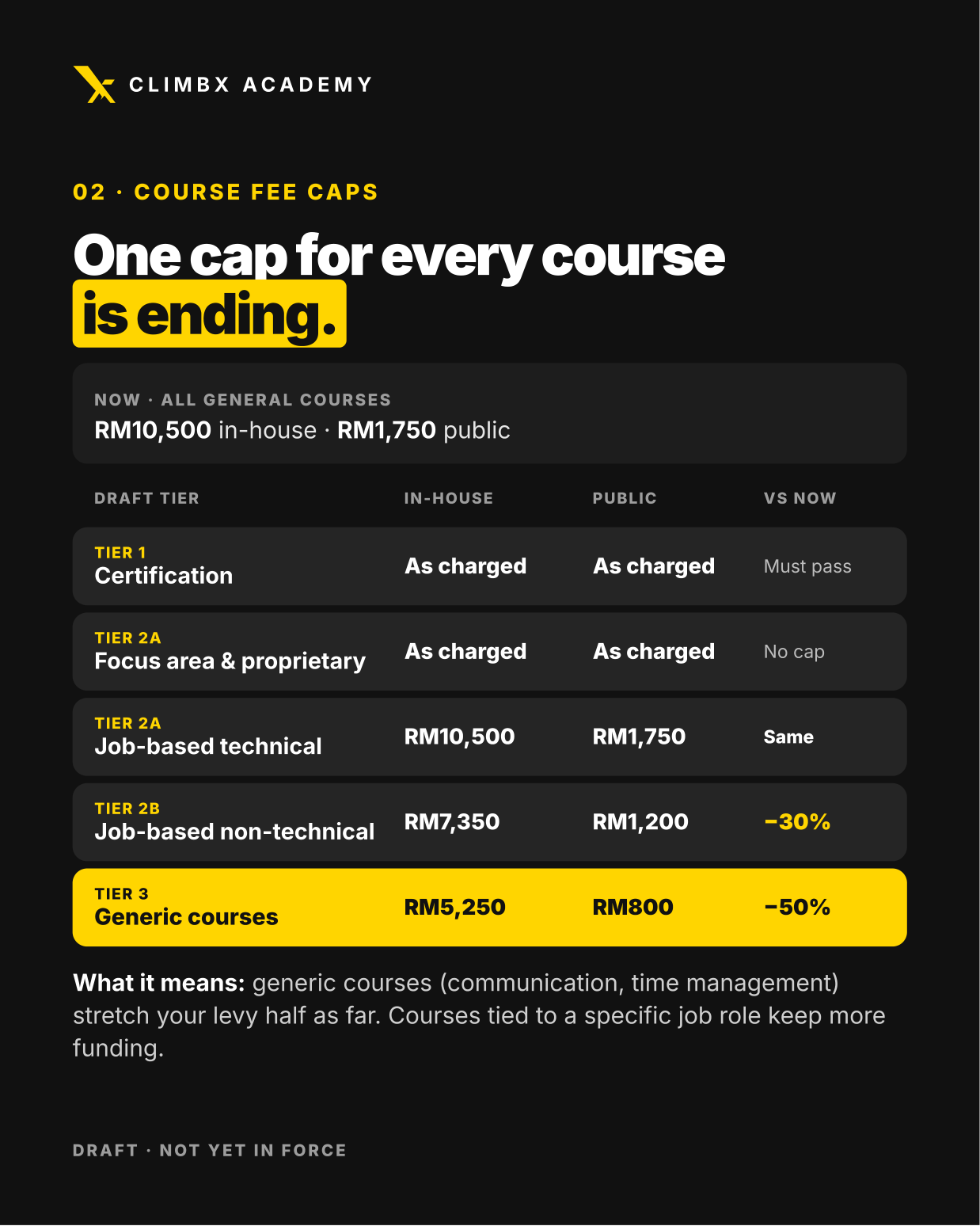
The draft’s rate table does not state its units. These figures assume they follow today’s per-day units, so confirm this when the final circular is issued.
Tie each course to a specific job role
The biggest difference between Tier 2b and Tier 3 is not the topic but the link to a job. The draft’s own examples make this clear. “Customer Service Excellence” is listed as a generic course, while “Customer Experience Management for Customer Service and Frontline Personnel” is listed as job-based non-technical training.
For each course in your 2027 plan, write down which role it is for and what that person should do differently afterwards. A course that names its audience and the work it improves is more likely to sit in a higher tier, and it is easier to justify internally too. If you have not yet mapped roles to skill gaps, our guide to how to conduct a training needs analysis shows how, and the free 2027 Training Planning Framework gives you the template.
Budget the top-up for generic courses
Some broad courses will still be the right choice, for example company-wide communication training. Keep them, but plan for the difference. If a two-day generic public course costs more than the draft’s Tier 3 cap would cover, the employer pays the balance. Flag these courses in your budget now rather than discovering the gap at claim time.
Weigh the pass risk before booking certification courses
Today, certification courses are funded as charged and claimed on attendance. Under the draft, the fee is only claimable if the trainee passes the assessment and receives the certification. If the employee fails, the employer pays that trainee’s fee from its own funds.
Before you nominate staff, check the pass requirements, the preparation time involved, and whether each person can realistically clear the exam.
Group in-house sessions to at least five participants
Today, an in-house class can run with as few as two trainees, with the fee prorated below five. The draft sets a minimum of five per session, with a maximum of 25 for technical courses and 50 for non-technical and generic ones. It also adds a large-group category for 50 to 1,000 participants.
Smaller teams may need to combine departments into one session or send people to public classes instead.
Keep completion evidence, not just attendance
The draft makes every claim conditional on successful completion and a valid certificate for each trainee, on top of the existing 75% attendance rule. Receipts would also be required for items such as meals and training materials, where today consumable materials up to RM100 per group can be claimed without an invoice. Set up these records now so they are routine by the time the rules change.
Whatever the final rules, apply early. Under the current rules, public training will join in-house training on a 14-day advance approval rule from 1 January 2027, as the HRDC/HRDF Claimable Courses page states.
What improves when you plan this way
When each course is tied to a role and a tier, the budget holds up at claim time. Training managers can see which courses are fully covered and which need a top-up before they commit. Claims are less likely to be queried, because completion records and receipts are already in place.
Most importantly, the levy goes to skills employees use at work, which is the outcome the reform is pushing towards. A course still only changes behaviour when managers follow up afterwards. Agreeing one change per person and checking it in the following weeks matters as much as choosing the right tier.
Where ClimbX fits
ClimbX programmes are built around specific roles in Malaysian sales, service and frontline teams. That is the kind of job-linked training the draft favours. Sessions use role-play and realistic workplace scenarios rather than lectures, and each programme includes follow-through after the workshop so managers can reinforce the skill on the job. All ClimbX programmes are HRDC/HRDF claimable.
For teams building applied AI skills, ClimbX also runs a public AI course in Malaysia from January 2027, with AI for Business, AI for Sales and AI for Marketing classes in Kuala Lumpur.
If you would like a second opinion on your 2027 plan, send your list of planned courses to hello@climbxacademy.com. You can leave out vendor names and prices. We will mark which draft tier each course is likely to fall into and where top-ups or class-size issues may come up, so you can judge the gaps before committing your levy.
Frequently asked questions
Is HRDF claimable training changing in 2027?
Under the draft scheme reform, yes. HRDF claimable training would be funded by tier rather than one cap for all general courses. Certification and focus-area courses stay funded as charged, job-based courses keep most of their funding, and generic courses drop to about half of today’s cap. The changes are a draft and only apply once HRDC/HRDF issues a final circular.
Will generic soft-skills courses still be HRDC/HRDF claimable?
Yes, but at a lower cap. The draft lists generic courses at RM5,250 for in-house and RM800 for public training, compared with RM10,500 and RM1,750 for general courses today. Linking a course to a specific job role may move it into the job-based non-technical tier, which is capped at RM7,350 in-house and RM1,200 public.
What happens if an employee fails a certification course under the draft?
The employer pays that trainee’s course fee from its own funds. Under the draft, certification fees are claimable only when the trainee passes the required assessment and obtains the certification. Assessment must be carried out by an independent, recognised third-party body. Today, certification courses are funded as charged and claimed on attendance.
What is the minimum class size for in-house training under the draft?
Five participants per session. The draft also sets a maximum of 25 for technical courses and 50 for non-technical and generic courses. It adds a large-group category of 50 to 1,000 participants. Today, in-house training can run with as few as two trainees, with the course fee prorated when fewer than five attend.
When will the HRDC/HRDF scheme reform take effect?
The draft does not give an effective date. It is a framework released for consultation, and its proposals may change before HRDC/HRDF issues a final circular. Until then, current rules apply, including the Allowable Cost Matrix rates. Employers can still use the draft to shape their 2027 training plans now.
Sources
- HRDC/HRDF, Allowable Cost Matrix guidebook (November 2025 edition)
- HRDC/HRDF, Claimable Courses (14-day rule and public training window)
- HRDC/HRDF, Scheme Reform Draft Exposure Framework (Levy-Funded Training Scheme). A draft for consultation; no public link was available.